

Do not make every engineering decision in one context
We started from a recurring failure mode: one coding session mixes requirements, architecture, implementation and review until early assumptions become invisible. Later reviewers then inherit decisions they never independently checked.
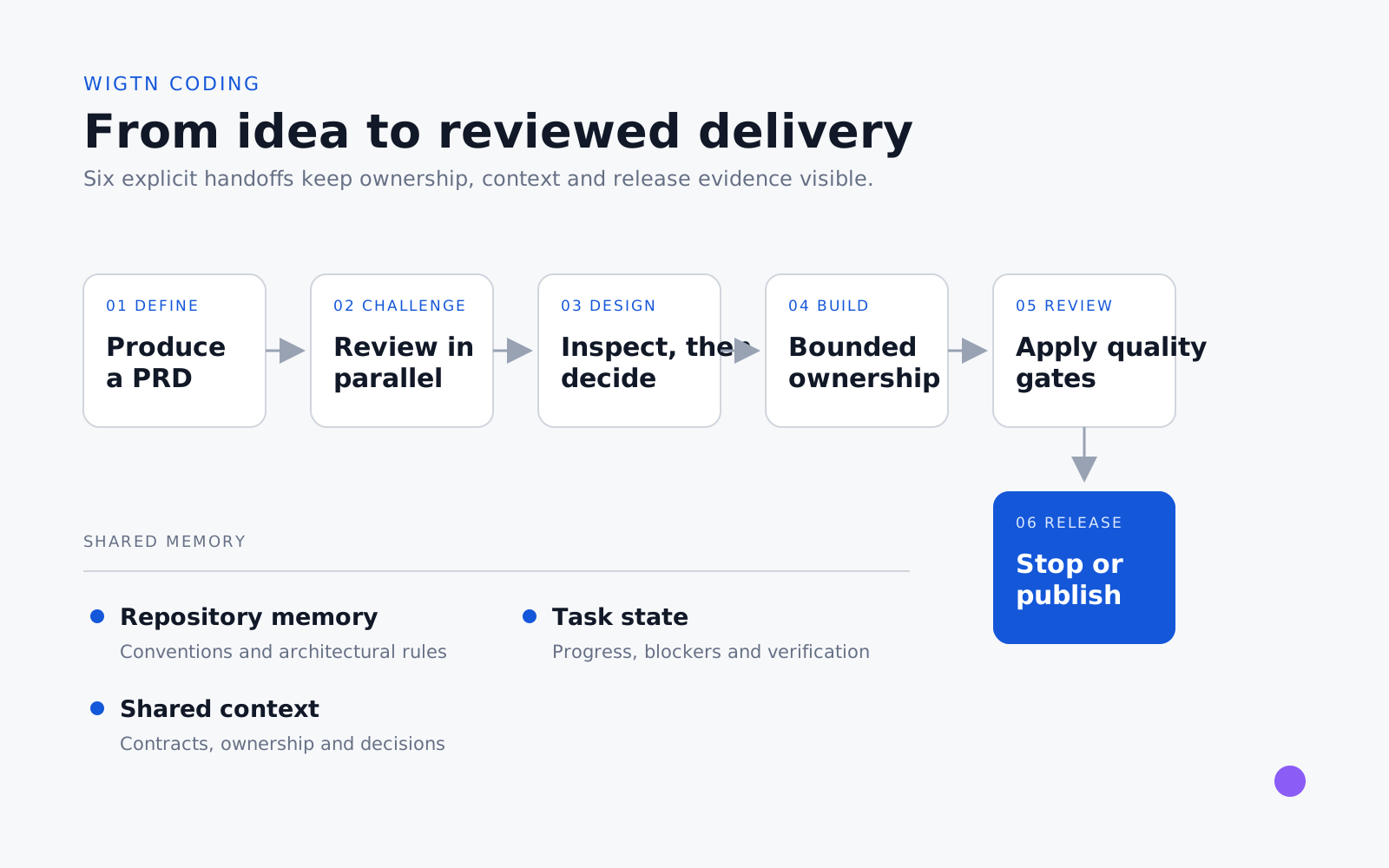
WIGTN Plugin separates those responsibilities into named stages with explicit artifacts. Parallelism is useful only when it creates independent scrutiny and bounded ownership, not when it merely increases the number of agents on screen.
Turn every handoff into an artifact
Clarify goals, actors, constraints, acceptance criteria and phased scope.
Completeness, feasibility, security and consistency reviewers inspect the same artifact independently.
Architecture choices follow repository scans, contracts and existing conventions.
Backend, frontend, AI and operations work is split by file and interface boundaries.
Readability, performance, testability, best practices and security receive separate checks.
Failed gates block release; successful runs prepare an intentional commit and pull request.
Three layers keep shared decisions visible
Workflow memory model
| Layer | Lifetime | Carries |
|---|---|---|
| Repository memory | Persistent | Conventions, commands, architectural rules |
| Shared context | One coordinated build | Contracts, file ownership, cross-team decisions |
| Task state | One work item | Progress, blockers, verification evidence |
We shipped a marketplace of stack plugins and then took it apart
The repository opened on 12 January 2026 and took 72 commits in its first month. The shape was wrong. Work was divided by technology, with separate plugins for frontend, backend, mobile and AI development, each carrying its own skills for the frameworks in that stack.
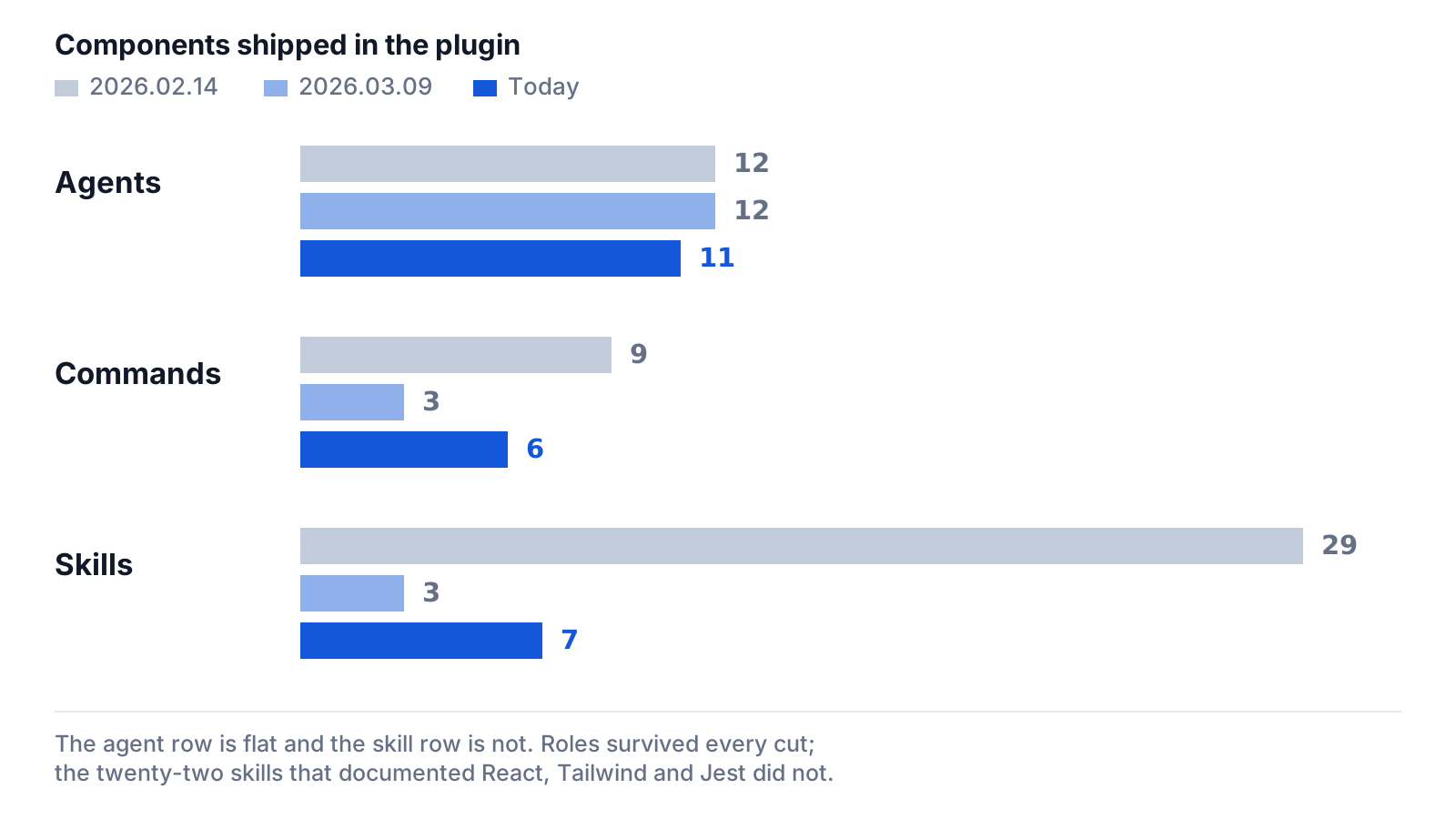
On 14 February those five became one. The division had been by technology, but the work does not divide that way. A React change and a FastAPI change need the same sequence of definition, independent review, bounded implementation and a release decision. They do not need different plugins. The merge removed 6,321 lines and added 3,011.
Three weeks later, two commits on consecutive days removed a further 30,670. The first cut 54 components to 32 and its message names the reason: twenty-two of the removed skills documented React, Tailwind and Jest, which the model already knew. Skills went from 29 to 7 in that pass and to 3 in the one that followed; they stand at 7 again today, after five months of regrowth. What survives at any count is project-specific information only.
Every upgrade is a cut, and every quiet month undoes part of it
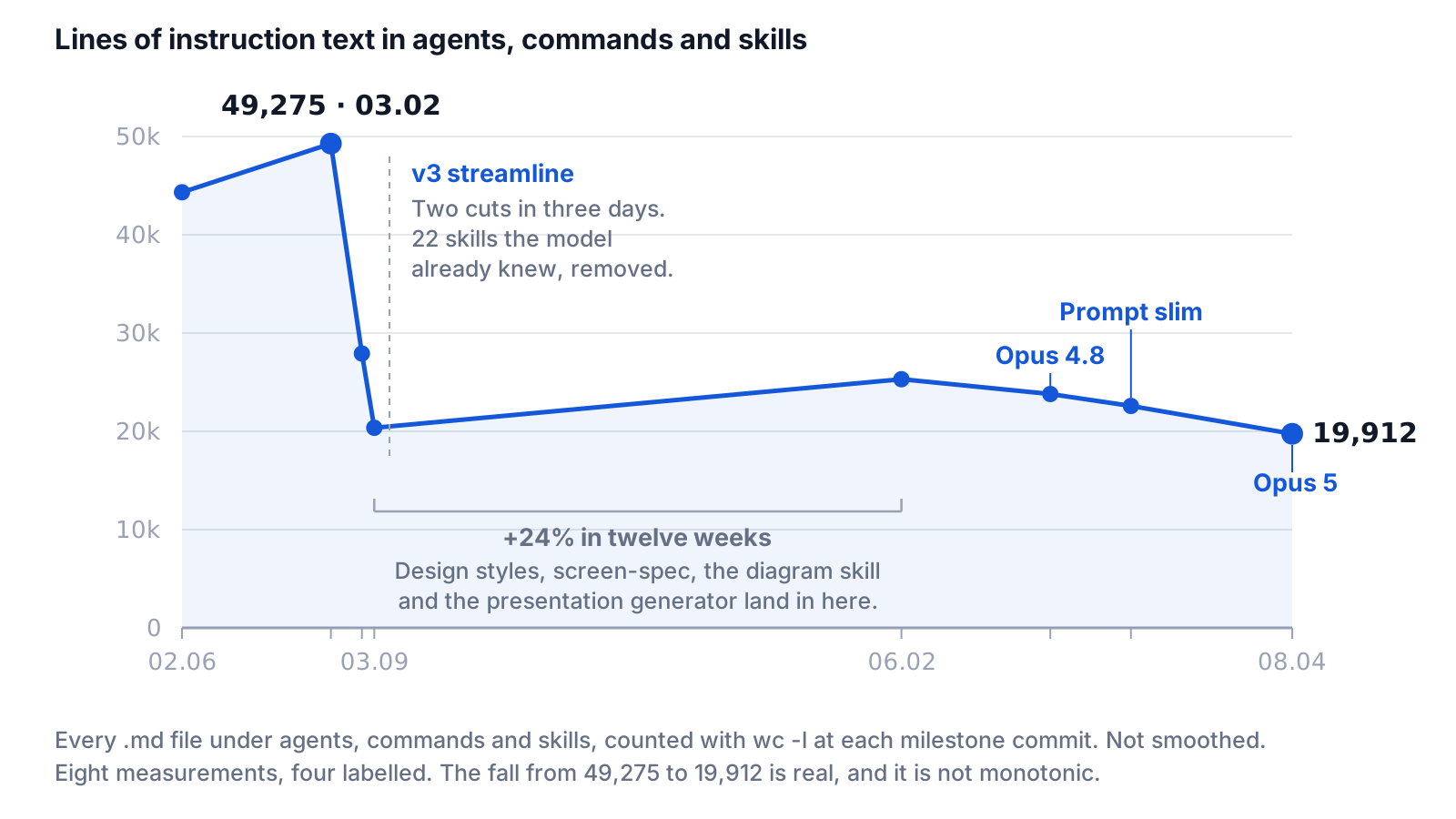
Checking out each milestone commit and counting the instruction text gives a shape we did not expect to have to admit. The surface does fall, from 49,275 lines to 19,912, but not in a straight line. It comes down hard at a model release and climbs back through the months in between, because that is when features get added. The March cut took 58% out in three days; the twelve weeks that followed put 24% back.
The cuts themselves are specific. In June, adapting to Opus 4.8 meant removing what the commit calls expressive over-harness, with no change to behaviour or logic: eight forced xhigh effort settings, and the fabricated numbers we had written into our own prompts, including hardcoded durations, speedup claims and example scores. In August, the Opus 5 pass kept the contracts and cut the rest.
Part 2 of this series put a number on the cost of leaving that growth alone. On two SWE-bench Verified tasks, GPT-5.6 Sol resolved 4 of 4 runs with the legacy harness and 4 of 4 without it, while the harness raised median wall time by 151.7% and output tokens by 141.2%. We published that against our own product, and it is what set the rule below.
Instruction surface immediately before and after each cut
| Date | Trigger | Before | After | Change |
|---|---|---|---|---|
| 2026.03.07 | v3 streamline | 49,275 | 27,918 | −43% |
| 2026.03.09 | v3 streamline, second pass | 27,918 | 20,361 | −27% |
| 2026.06.26 | Opus 4.8 | 25,308 | 23,795 | −6% |
| 2026.07.09 | Prompt slim | 24,360 | 22,584 | −7% |
| 2026.08.04 | Opus 5 | 22,748 | 19,754 | −13% |
The prompts shrank; the enforcement grew
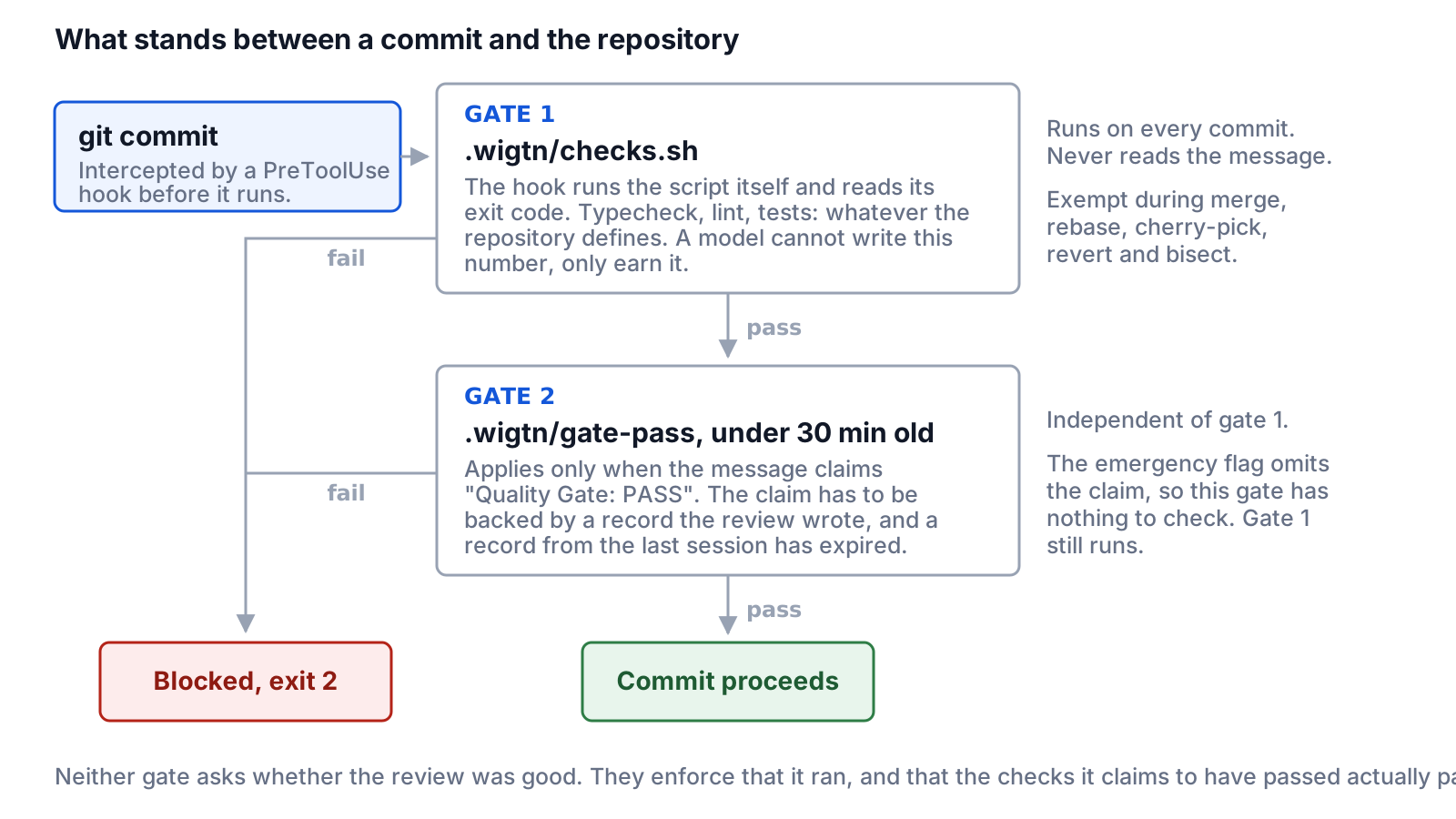
Deleting instructions is only safe if the things that must not be skipped stop being instructions. A prompt is advice a model can quietly drop when the context fills. A hook is not. Between July and August the plugin moved each rule that mattered out of the prompt and into something mechanical.
One of those replacements fixed nondeterminism in our own tooling. The gate used to sum findings into a score out of 100, and the same diff could score 78 on one run and 85 on the next, which decided whether the commit was blocked. The score is gone. A rollup counts critical and major findings instead, so the same findings now always produce the same decision.
What replaced prompt instructions
| Was written as an instruction | Is now |
|---|---|
| Run the quality gate before committing | A pre-commit hook that blocks the commit when no gate record exists |
| Report the review honestly | A checks script the hook runs itself, so the exit code is not written by the model |
| Do not reuse an old review | A 30-minute freshness window on the gate record |
| Weigh security findings heavily | Security-critical blocks the commit regardless of any other finding |
| Keep the checks enabled | Deleting the script regenerates it; opting out requires writing down a reason |
The benchmark exists as a protocol, not yet as a result
The local evaluation harness defines four areas: long-horizon coding, code review, ambiguous PRD interpretation and frontend design. It fixes prompts, tools and effort, repeats each run three times and uses blind graders.
Only one comparison row currently contains results. Publishing a multi-agent advantage now would turn package counts into a performance claim they cannot support.
- 01Report median and range across three runs, not the best run.
- 02Score hidden-test correctness before stylistic preference.
- 03Normalize cost as dollars per completed task or detected defect.
- 04Release prompts, run logs, grader rubrics and failure cases together.
Where the claim stops
- L01Agent and skill counts describe the package surface, not developer productivity.
- L02The surface figures count lines of Markdown under agents, commands and skills. They measure how much instruction text ships, not how much of it the model reads on a given turn, and a smaller file is not evidence that what remains is correct.
- L03The reductions are decisions this team made about its own tool, not a controlled comparison of harness sizes. The one controlled result we have is in part 2, and it covers two tasks on one model.
- L04Operational timing observations are not a controlled single-agent comparison.
- L05The current benchmark matrix is incomplete and must not be summarized as a result.